
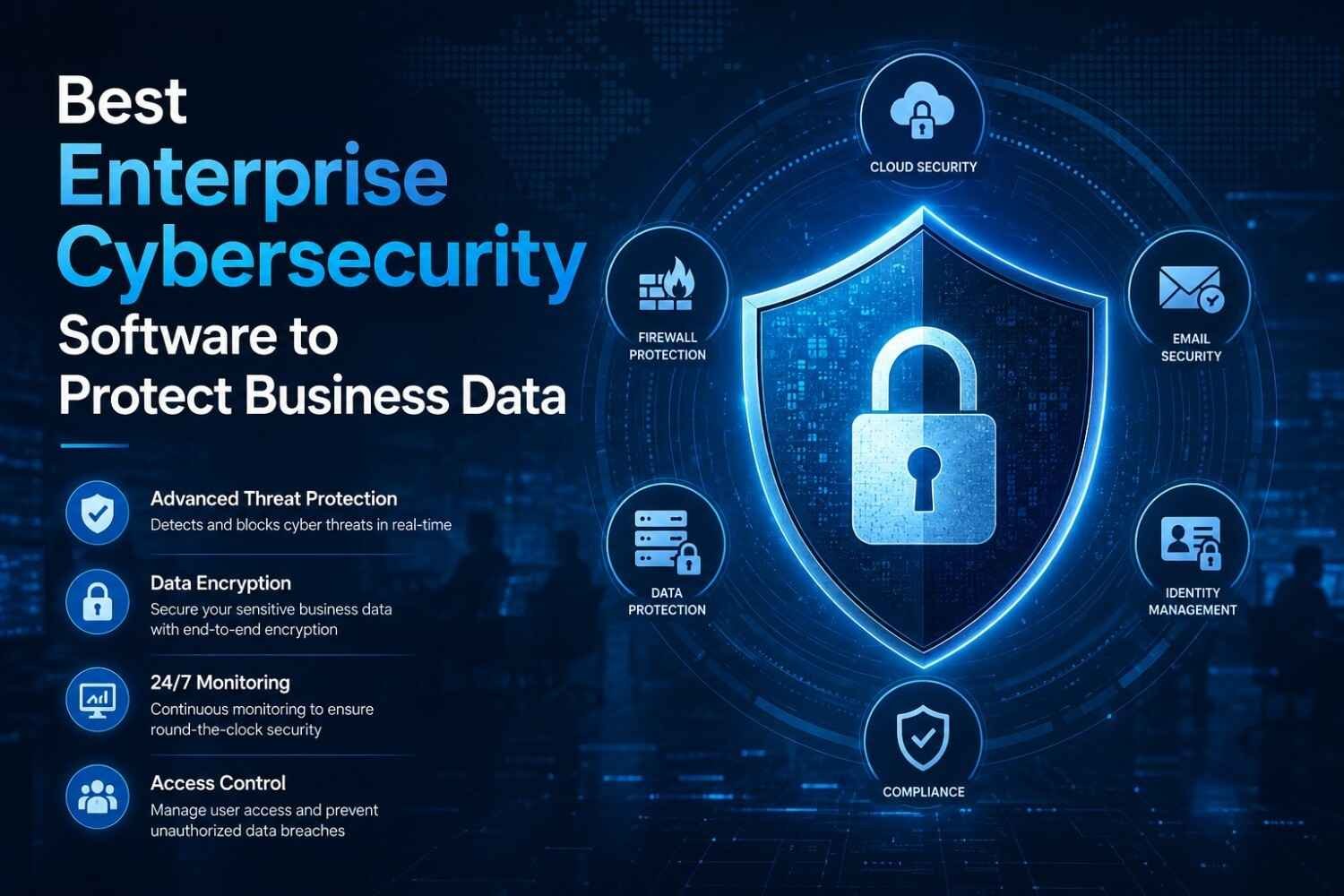
Businesses today face an unprecedented number of cyber threats. From ransomware attacks and phishing scams to insider threats and sophisticated AI-driven malware, organizations of every size need comprehensive protection to safeguard their sensitive information. Selecting the best enterprise cybersecurity software is no longer optional—it's a critical investment in business continuity, regulatory compliance, and customer trust.
Modern cybersecurity platforms combine AI-powered threat detection, endpoint security, cloud protection, identity management, and real-time monitoring to defend against evolving cyber risks. Whether you're a startup, a growing company, or a global enterprise, choosing the right solution can significantly reduce the chances of costly data breaches.
Why Enterprise Cybersecurity Software Matters
Cybercriminals target businesses because they store valuable customer information, financial records, intellectual property, and confidential business data. A single successful attack can result in financial losses, regulatory penalties, reputation damage, operational downtime, customer trust issues, data theft, and legal liabilities.
Enterprise cybersecurity software provides multiple layers of protection that work together to detect, prevent, and respond to security incidents before they cause serious damage.
Essential Features to Look For
- AI-powered threat detection
- Endpoint Detection and Response (EDR)
- Extended Detection and Response (XDR)
- Managed Detection and Response (MDR)
- Zero Trust architecture
- Identity and Access Management (IAM)
- Multi-Factor Authentication (MFA)
- Cloud security
- Email protection
- Data Loss Prevention (DLP)
- SIEM integration
- Security analytics
- Threat intelligence
- Compliance management
- Automated incident response
Best Enterprise Cybersecurity Software in 2026
1. Microsoft Defender for Endpoint
Ideal for organizations using Microsoft 365. Key Features: AI threat detection, endpoint protection, automated investigation, vulnerability management, cloud security integration, and Microsoft Sentinel compatibility. Best for medium to large businesses already using Microsoft products.
2. CrowdStrike Falcon
CrowdStrike is widely recognized for cloud-native endpoint protection. Highlights: AI-powered security, real-time threat intelligence, EDR, XDR, identity protection, USB device control, and cloud-native platform. Best for large enterprises requiring advanced endpoint security.
3. Palo Alto Networks Cortex XDR
One of the industry's leading XDR platforms. Features include machine learning, behavioral analytics, threat hunting, cloud workload security, automated response, and advanced malware protection. Best for businesses seeking enterprise-grade threat detection.
4. SentinelOne Singularity
SentinelOne provides autonomous endpoint security powered by AI. Advantages: AI detection, automatic remediation, ransomware rollback, cloud security, endpoint protection, and identity security. Perfect for companies needing automated cybersecurity operations.
5. Trend Micro Vision One
Trend Micro delivers strong enterprise protection across multiple environments. Benefits: Email security, endpoint protection, cloud security, XDR, threat intelligence, and risk analytics. Suitable for organizations operating hybrid cloud environments.
6. Sophos Intercept X
Sophos combines powerful ransomware defense with advanced AI. Key Benefits: Deep learning AI, anti-ransomware, managed threat response, endpoint detection, exploit prevention, and remote workforce protection.
7. Cisco SecureX
Cisco integrates networking and cybersecurity into one platform. Features: Threat intelligence, firewall management, cloud security, email protection, endpoint integration, and network visibility.
8. Fortinet FortiEDR
Fortinet offers enterprise-grade endpoint protection. Highlights: AI analytics, malware protection, incident response, threat intelligence, and compliance reporting.
AI Is Transforming Enterprise Cybersecurity
Artificial Intelligence has become one of the biggest innovations in cybersecurity. AI can detect suspicious behavior instantly, block ransomware automatically, predict future attacks, analyze billions of security events, reduce false positives, and speed up incident response. Organizations adopting AI-powered cybersecurity platforms typically improve threat detection while reducing response times.
Zero Trust Security
Zero Trust follows one simple rule: Never trust, always verify. This security model continuously validates users, devices, and applications before granting access to sensitive business resources.
Benefits include reduced insider threats, better identity protection, stronger remote access security, improved compliance, and lower breach risk.
How to Choose the Right Solution
Before purchasing cybersecurity software, consider company size, industry requirements, budget, cloud infrastructure, existing IT environment, compliance needs, scalability, vendor support, AI capabilities, and integration options. Request product demos and run pilot deployments to ensure the platform aligns with your operational needs.
Best Practices for Stronger Business Security
- Enable Multi-Factor Authentication (MFA)
- Regularly update software
- Train employees against phishing
- Perform vulnerability assessments
- Encrypt sensitive data
- Back up critical systems
- Monitor security logs continuously
- Restrict privileged access
- Conduct penetration testing
- Develop an incident response plan
Future Trends in Enterprise Cybersecurity
- AI-driven security operations
- Autonomous threat hunting
- Passwordless authentication
- Quantum-resistant encryption
- Secure Access Service Edge (SASE)
- Cybersecurity mesh architecture
- Continuous risk assessment
- AI-powered phishing detection
- Automated compliance management
Frequently Asked Questions
What is enterprise cybersecurity software?
Enterprise cybersecurity software is a comprehensive platform designed to protect organizations from cyber threats by securing endpoints, networks, cloud environments, identities, and sensitive data.
Which cybersecurity software is best for businesses?
Popular choices include Microsoft Defender for Endpoint, CrowdStrike Falcon, Palo Alto Cortex XDR, SentinelOne Singularity, Trend Micro Vision One, Sophos Intercept X, Cisco SecureX, and Fortinet FortiEDR.
Why is AI important in cybersecurity?
AI enables faster threat detection, automated incident response, behavioral analytics, and improved protection against sophisticated attacks.
Conclusion
Choosing the best enterprise cybersecurity software is one of the most important decisions an organization can make. The right platform should deliver layered protection across endpoints, networks, cloud environments, identities, and business-critical data while leveraging AI, automation, and threat intelligence to stay ahead of attackers.
By combining robust cybersecurity software with employee awareness, regular updates, and proactive risk management, businesses can significantly reduce the likelihood of data breaches and maintain the trust of customers, partners, and stakeholders. As cyber threats continue to evolve, investing in a scalable and intelligent security solution today will help ensure long-term resilience and operational success.